
Cresencia Marjorie Chiremba
Last week, I wrote about vendors in the central business district and the need to balance livelihoods with everyone’s right to use public spaces.
I thought the conversation was largely about congestion, cleanliness and the character of our city centre.
But a recent experience in a high-density suburb made me realise that the issue reaches much further. It is no longer simply about where people sell.
It is also about what they sell, how it is handled, and whether customers are being protected.
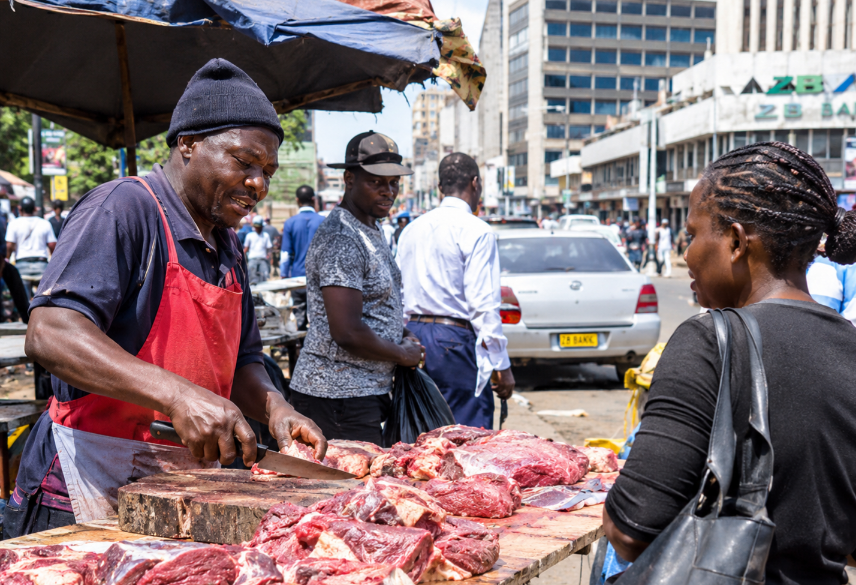
Behind the main shops, I saw women selling freshly cut chicken pieces and fish from open dishes. There were no food covers.
In the summer heat, flies hovered around the meat. People walked past, some stopping to buy. I stood there wondering how we had arrived at a point where this could feel normal.
I am not writing this to condemn the women selling. Many are trying to survive in an economy where formal employment is hard to find and household needs do not wait.
A small trading business may be the difference between feeding a family and going without. That reality deserves compassion, not mockery.
But compassion for a seller cannot mean indifference to the customer. The person buying that chicken or fish is also trying to feed a family.
They may choose the cheaper option because money is tight. They should not have to choose between affordability and food handled safely.
Growing up, I remember seeing fresh meat sold in open street markets in other countries on television. We would look at those scenes and say, “Tichiti hazvina hutsanana”—we thought it was unhygienic.
It seemed distant from our own lives. Now, standing in our neighbourhood, I found myself asking: have we become so accustomed to struggling that we no longer notice the risks around us?
Informal markets are not automatically unsafe. Around the world, markets can operate safely with clean water, proper storage, temperature control, covered food, waste disposal and regular inspection.
The concern is what happens when those safeguards are absent, especially with meat and fish that can spoil quickly in warm weather.
Flies are not just unpleasant.
They can carry germs from waste and contaminated surfaces onto food. Meat and fish not kept sufficiently cold can allow harmful bacteria to multiply.
Customers cannot tell by looking, smelling or tasting whether food contains dangerous microbes. By the time someone becomes ill, the source may be difficult to identify.
And now the rainy season is approaching.
Zimbabweans know how heavy rains can expose weaknesses in sanitation: overflowing drains, standing water, rubbish and contaminated water sources.
Cholera is a serious concern wherever safe water and sanitation are compromised. It would be irresponsible to claim that a particular roadside sale will cause cholera, but equally irresponsible to ignore conditions that make preventable disease more likely.
So where are the relevant authorities? Are inspections reaching these trading spaces? Are vendors given practical guidance and facilities to keep food safe? Are there affordable places where people can trade without putting themselves or customers at risk?
And when unsafe handling is observed, is enforcement consistent—or does it appear only when someone complains?
A lasting solution cannot be to confiscate goods and leave people with no alternative. Nor can it be to look away because vendors are poor.
Authorities need to work with vendors, shop owners, residents and public-health officers to establish clear standards and make compliance possible.
That means clean selling areas, reliable water, proper waste collection, covered displays, cold storage for perishables and fair inspections.
Customers also need a simple way to report serious concerns without being dismissed.
As customers, we have responsibilities too. We can ask how food is stored, avoid items exposed to flies or dust, and report unsafe conditions.
But the burden cannot rest on shoppers alone. Most customers cannot inspect a supply chain or test food for contamination. Public safety requires systems, not just personal vigilance.
The women I saw that day were not the whole problem. They were part of a bigger picture: unemployment, pressure on household incomes, inadequate trading infrastructure and gaps in enforcement.
If we focus only on the seller behind a dish, we miss the decisions and failures that allowed the situation to develop.
My earlier article asked whether the CBD can belong to vendors alone.
This experience has left me with a related question: can our streets and neighbourhoods become places where earning a living is possible without compromising the health of the people who live there?
The customer is not asking for luxury.
We are asking for food handled with basic care, and for authorities to take that expectation seriously before the rainy season turns today’s warning signs into tomorrow’s public-health emergency.
ABOUT THE AUTHOR
***Cresencia Marjorie Chiremba is a Marketing, Sales & Customer Service Consultant. For suggestions and training, contact her at [email protected] or +263 712 979 461 / 0719 978 335 / 0772 978 335.